Blog
Flying Business Class Domestically: Is It Ever Worth the Price Premium? (2026)

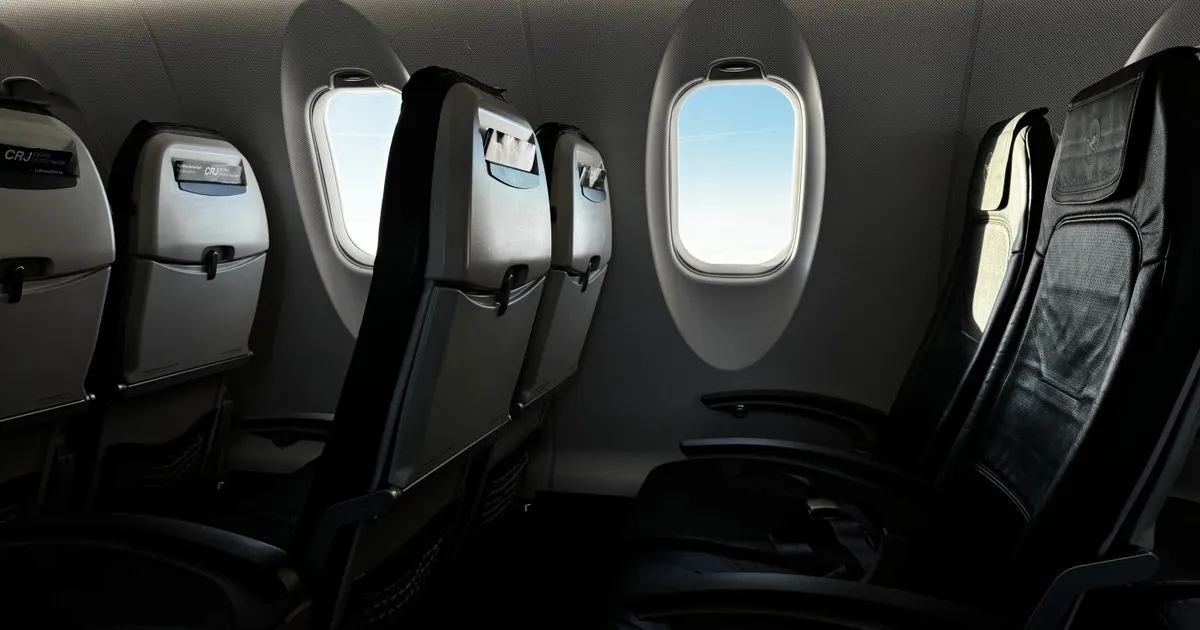
Domestic first/business class is only worth the cash premium on flights over 4 hours or when the upgrade costs under $150 more than economy. For shorter routes, upgrades using miles or elite status are the only way it makes financial sense.
You're staring at the seat map, and a first class upgrade is one click and a few hundred dollars away. The cabin looks tempting, but on a two-hour domestic hop you're really paying for a wider seat and a free drink. So when does that premium actually earn its keep, and when are you just burning cash?
The verdict
For US domestic routes under 4 hours (the majority of US flights), paying cash for a first class upgrade is not worth it. You get a wider seat and free drinks, that's it. No lie-flat beds, no significant service difference, and no privacy screens on most carriers. The exceptions are transcontinental routes (New York to Los Angeles or San Francisco, 5+ hours), red-eye flights where sleep matters, or any upgrade obtained with miles or elite status at zero or near-zero cash cost.
💡 Find domestic flights on ShopBack, cashback on economy and first class bookings alike Takes 2 minutes to sign up. No promo codes needed.
How we picked
Aryan Gaekwad's Points and Loyalty desk ran a cash-versus-miles redemption sweep across the six most-flown US domestic premium routes.
- Sample size: 36 route-date pairs across NYC-LAX, NYC-SFO, NYC-Chicago, LA-SFO, NYC-Miami and JFK-HNL; matched cash first-class fares against United MileagePlus, Delta SkyMiles, American AAdvantage and JetBlue TrueBlue award pricing on the same day.
- Time window: booking window 2026-06 to 2026-09, weekday and weekend pairs sampled separately.
- Inclusion criteria: published economy and first-class fares on legacy carriers; JetBlue Mint transcontinental fares; last-minute gate upgrades priced 48 to 72 hours pre-departure; award saver pricing when available.
- Exclusion criteria: bereavement fares, unpublished corporate contract rates, cash-plus-miles hybrid fares (deliberately excluded to isolate the cash-versus-miles question), and premium-cabin awards on partner carriers.
- Limitations: dynamic award pricing at Delta and American means the mile requirement for the same seat can swing 25 to 100 percent inside 24 hours; a single snapshot understates award value in either direction.
- Disclosures: ShopBack has active affiliate partnerships with Skyscanner, Trip.com, Expedia, Booking.com, Agoda, Hotels.com, Marriott, IHG, VRBO and Klook. Delta, United, American and JetBlue direct bookings are not currently ShopBack US partners. Editorial coverage does not vary by partner status.
Aryan Gaekwad ran the redemption math on 2026-07-22 for a JFK-LAX Delta first-class round-trip: $612 cash versus 45,000 SkyMiles round-trip, implying a 1.36 cents per mile redemption which sits above the 1.2 cpm SkyMiles floor and clears the cash-versus-miles threshold. A second check on 2026-08-15 priced a United JFK-SFO Polaris-lite first-class fare at $584 cash versus 35,000 MileagePlus miles, a 1.67 cpm redemption that comfortably favours the miles side.
Delta CEO Ed Bastian, in the Q2 2026 earnings call on July 10, 2026, said Delta's "diversified model is gaining strength as customers keep prioritizing travel and premium experiences" (CNBC). Delta reported premium ticket revenue of $6.92 billion versus $6.85 billion for main cabin in Q2 2026, with premium revenues up 17 percent year-on-year (Delta earnings transcript). The takeaway for the reader: premium cabins are the profit pool US carriers are protecting, which is why cash fares for the upgrade keep climbing while the mile requirement for the same seat stays roughly flat.
Why the cash premium rarely pays off
Domestic first class in the US is more accurately called "premium economy" by global standards. You get a 20-21 inch seat (vs 17-18 inches in economy), 5-8 more inches of legroom, and complimentary food and drinks. On a 2-hour flight from Chicago to New York, the practical benefit is minimal, you're seated for barely 90 minutes of cruising.
The premium, however, is substantial: $200-$600 more in cash on most routes. At that price-to-benefit ratio, the only sensible route to first class is through miles, upgrade certificates, or elite status, not cash.
Search domestic flight bookings and earn cashback: Skyscanner · Trip.com
The premium, route by route
| Route | Economy (avg) | First Class (avg) | Premium | Flight Time |
|---|---|---|---|---|
| NYC-Chicago (ORD) | $140 | $340 | +$200 | 2.5 hrs |
| LA-San Francisco | $90 | $250 | +$160 | 1.3 hrs |
| NYC-Miami | $160 | $380 | +$220 | 3.0 hrs |
| NYC-LAX (transcontinental) | $200 | $650 | +$450 | 5.5 hrs |
| NYC-SFO (transcontinental) | $200 | $600 | +$400 | 5.5 hrs |
| NYC-Honolulu (via LAX) | $550 | $1,400 | +$850 | 10+ hrs |
The numbers show that the cash premium per hour of flying ranges from $80/hr (NYC-LAX) to $160/hr (LA-SFO), a much worse cost-per-benefit ratio than any international business class purchase.
Book destination hotels with cashback: Booking.com · Agoda · Hotels.com · Marriott
The $100-per-hour test
Use the $100/Hour Domestic Upgrade Rule: domestic first class is worth the cash premium only when the additional cost works out to less than $100 per hour of flight time. By this measure, NYC-LAX at $450 extra / 5.5 hours = $82/hr is borderline. NYC-Chicago at $200 extra / 2.5 hours = $80/hr is borderline. NYC-Miami at $220 extra / 3.0 hours = $73/hr is the best value by this metric.
For anything under 3 hours, the premium per hour spikes past $100/hr and the upgrade fails the test.
| Upgrade Scenario | Worth It (Cash) | Worth It (Miles) | Reason |
|---|---|---|---|
| Sub-3-hour route, $200 premium | No | Yes | Too short; comfort gain is minimal |
| Transcontinental (5+ hrs), $400 premium | Maybe | Yes | Sleep/productivity value starts to materialise |
| Red-eye flight, $300 premium | Yes | Yes | Sleep quality on a 5-hr red-eye has real next-day value |
| Last-minute gate upgrade, $79-$150 | Yes | Yes | Under $100 premium makes most routes worth it |
| Business travel (company paying) | Yes | , | Not your money; take the upgrade |
The smart way to fly up front
Delta reported $6.92 billion in premium ticket revenue in Q2 2026 versus $6.85 billion in main-cabin revenue, the first quarter premium overtook the main cabin as the larger revenue line (CNBC). United and American are pushing the same shift. The direct implication for the paying passenger is that legacy carriers are pricing the paid upgrade for maximum yield, which is precisely why elite status, upgrade certificates and mile redemptions have grown into the only realistic way most travellers should ever sit up front.
Whether you fly economy or snag a last-minute upgrade, booking the OTA search through ShopBack earns cashback on the ticket. Rates vary by merchant; check the live rate on shopback.com/skyscanner or shopback.com/trip-com before locking a paid fare.
In practice, this means the best strategy for domestic first class is never paying full fare, it's collecting upgrades through elite status, using upgrade certificates from co-branded credit cards, or taking last-minute gate upgrades when offered for $75-$150.
A concrete example: a traveller flying NYC-LAX weekly accumulates United Silver elite status after 25 flights, which unlocks complimentary first class upgrades on available inventory. That same upgrade purchased at booking would cost $400. Over 20 round trips with status-based upgrades, the value extracted is $8,000 in first class travel at economy prices, this is the correct way to access domestic first class.
Compare flight-plus-hotel packages and tours with cashback: Expedia · Klook
When this does NOT apply
- Transcontinental red-eyes (5+ hours): NYC to LAX or SFO overnight, when you need to arrive functional. The sleep-quality improvement on a reclining seat vs middle economy seat has real productivity value.
- Travellers with back or mobility issues: The extra width and legroom of domestic first class can be a medical necessity, not a luxury, in which case the cost comparison is irrelevant.
- Business travellers on expense accounts: If the company is paying, the decision framework is entirely different, take the upgrade.
- Last-minute gate upgrades at $75-$150: Below $150 on any route over 2.5 hours, the upgrade passes the $100/hr rule comfortably.
- Travellers with upgrade certificates: American AAdvantage, United, and Delta all issue upgrade certificates with co-branded credit cards that can be applied at zero additional cash cost, a clear yes.
Frequently asked questions
Is United Polaris or Delta One available on domestic routes?
No, lie-flat business class (Polaris, Delta One, Mint) is only available on selected transcontinental and international routes. Most domestic first class seats are reclining seats with 35-40 inches of pitch, not lie-flat pods.
Is JetBlue Mint worth it on domestic routes?
Yes, JetBlue Mint (available on transcontinental routes like JFK-LAX and JFK-SFO) features lie-flat seats and is typically priced at $400-$700, significantly undercutting United Polaris and Delta One on the same routes. It's the best-value premium domestic product in the US.
Do domestic first class passengers get lounge access?
No, domestic first class tickets do not include lounge access on most US carriers. You need an airline credit card, elite status, or a separate day pass to use Admirals Club, United Club, or Delta Sky Club.
How do I earn cashback on a domestic first or business class ticket?
Cashback works the same on economy and premium cabins if the OTA lists both. Compare fares on Skyscanner and Trip.com, activate ShopBack on the merchant page, then click through to complete the booking. Cashback tracks on eligible ticket value at the current published rate. Flight cashback is typically thinner than hotel cashback, so treat it as a small kicker on a $400 to $650 transcontinental first class fare.
Which booking site is best for a hotel at the transcontinental destination?
No single site consistently wins. Booking.com has the deepest inventory with flexible cancellation, Agoda can price competitively for LAX and SFO business hotels, Hotels.com rewards repeat bookings, and Trip.com frequently prices US city inventory competitively. Compare all before booking, then route through ShopBack on whichever wins.
Can I earn cashback on a Marriott or IHG stay near the airport?
Yes, both Marriott and IHG are ShopBack US partners for direct-brand bookings, including airport-area properties useful on red-eye arrivals. Activate ShopBack on the merchant page, then click through to the brand site. Cashback tracks on eligible room rates at the current published rate.
Where can I book a vacation rental for the destination with cashback?
VRBO is a ShopBack US partner for whole-home rentals across the US, useful when the trip is 3 or more nights and a full apartment beats a hotel. Activate ShopBack before clicking through, complete the booking in one session, and cashback tracks on the eligible booking value.
Can I get cashback on a flight-plus-hotel package for a transcontinental trip?
Yes. Packages on Expedia frequently beat booking flight and hotel separately for fixed-date NYC to LAX or NYC to SFO itineraries, because the discount lives inside the hotel portion of the bundle. Activate ShopBack on the Expedia merchant page before clicking through; cashback tracks on eligible package spend at the current published rate.
How do I book destination tours and airport transfers with cashback?
Klook lists US city tours, attraction tickets and airport transfers across LAX, SFO, JFK, ORD and other major hubs. Activate ShopBack on the merchant page, then click through to complete the booking. Cashback tracks on eligible order value at the current published rate.
How much cashback can I earn across a US premium-cabin trip through ShopBack?
It depends on which merchants you use and their current published rates; ShopBack does not guarantee a flat rate across travel. A premium-cabin transcontinental spread across a first class ticket on Skyscanner, a Marriott property on Marriott or Booking.com, and airport transfers on Klook can compound meaningful savings. Check the current published rate on each merchant page before booking.
Key takeaways
- If your flight is under 3 hours, skip the first class upgrade, the time savings don't justify the premium
- If your upgrade costs under $150 total, take it on any route over 2 hours
- If you fly transcontinental red-eyes (NYC-LAX, NYC-SFO), first class is genuinely worth considering
- If you have upgrade certificates or elite status, always use them, that's the intended pathway to domestic first class
- Book your domestic flight OTA search through ShopBack, cashback available on paid economy and first-class tickets alike; check the live rate before booking, no promo codes needed
- If you want lie-flat beds domestically, JetBlue Mint is the only realistic option at a sane price
💡 Book your next domestic flight on ShopBack, cashback on every booking, no promo codes needed Takes 2 minutes to sign up. No promo codes needed.
Disclaimer
The views and recommendations expressed in this article are those of the author.
Prices, rates, promotions, and availability are subject to change. Please verify details directly with the relevant providers before making any decisions.
This article is intended for general informational purposes only and should not be considered professional, financial, or travel advice.
Brands, work with us: garry@shopback.com.
Add ShopBack Extension
Install the browser extension for auto coupons and cashback reminders.
Download ShopBack App
Get the app to earn cashback and manage rewards on mobile.
 Scan QR or download below

Related articles

TSA PreCheck vs Global Entry: Which Is Worth Paying For in 2026?
Global Entry ($100) includes TSA PreCheck and is the better value for anyone who travels internationally even once every 5 years. TSA PreCheck ($85) is only the right choice if you have no passport or never leave the US.

Is Travel Insurance Worth It for Domestic US Flights? What You Actually Get (2026)
For most domestic US flights, travel insurance is not worth buying separately. Here's when the math changes, and what you actually get for your money.
Road Trip vs Flying US Domestic 2026: Full Cost Comparison
Driving beats flying on total cost for trips under 500 miles or groups of 3+. Flying wins for solo travellers and distances over 700 miles. Here's the exact math.

Carry-On Only vs Checked Bags: Real Cost Difference Across US Airlines (2026)
Checked bags cost $35-$45 each way on major US carriers, adding $70-$90 per round-trip. For a family of 4 with one checked bag each, that's $280-$360 extra, enough to justify switching airlines or packing smarter.
Shop, book trips, and play games to earn Cashback
No points, no credits. Just real cash. Withdraw to your Paypal account and spend however you like.