Blog
Contents
What Fast Company's list actually means
What ShopBack does, in one paragraph
Why 20M+ active annual members use it
How the affiliate model actually funds cashback
The eight things ShopBack does uniquely well
Featured US partner brands
US-specific context you should know
Why the Fast Company recognition landed so early in US
What to do next
FAQs
Blog
Fast Company Named ShopBack One of 2026's Most Innovative Companies

Fast Company named ShopBack to its 2026 World's Most Innovative Companies list less than a year after US launch. Here is what ShopBack actually does.
Fast Company Named ShopBack One of 2026's Most Innovative Companies
Verdict: On 24 March 2026, Fast Company named ShopBack to its 2026 World's Most Innovative Companies list in the Finance and Personal Finance category. The recognition landed less than a year after ShopBack's US launch in 2024. If you have seen the name and wondered what ShopBack does, this article explains it in plain English: a free rewards platform that pays you real USD back on things you were going to buy anyway, funded by retailer affiliate commissions rather than by anything you pay.
Start here: Sign up free at shopback.com and install the Chrome extension. You will earn USD cashback the next time you shop at Amazon, Walmart, Expedia, or any of 2,000+ US partners, on top of your credit card rewards.
What Fast Company's list actually means
Fast Company's World's Most Innovative Companies list is the magazine's flagship annual ranking. Each year it identifies companies that have reshaped their industries in the previous 12 months through new products, new business models, or scale that changes the competitive picture. The list is broken into categories (Finance and Personal Finance is one of about three dozen), and inclusion is editorially decided by Fast Company's staff based on submissions, industry research, and independent reporting.
Landing in the Finance and Personal Finance category means Fast Company judged ShopBack to be materially reshaping how consumers earn from everyday spending. That framing matters for a US audience meeting ShopBack for the first time: this is not a coupon site, a promo code aggregator, or a points loyalty program. It is a rewards platform that pays real currency, and the third-party recognition arrived at a moment when ShopBack was still under a year into US operations.
For context on the timing: ShopBack was founded in Singapore in 2014, so 2026 marks its 12th year globally. US launch was 2024. Fast Company recognition in March 2026 means the platform crossed a bar for editorial inclusion inside a market it had barely begun to scale in.
What ShopBack does, in one paragraph
ShopBack is a free everyday rewards platform. You start a shopping session at ShopBack (shopback.com, the mobile app, or the Chrome browser extension), click through to a partner store like Amazon, Walmart, Expedia, or eBay, and check out as normal. The retailer pays ShopBack an affiliate commission for sending you. ShopBack shares most of that commission back with you as USD cashback, paid to your PayPal or ACH account once the order confirms. You pay the retailer's normal checkout price, no markup, no service fee, no withdrawal fee.
That is the entire mechanic. Every additional feature (Travel Planner, in-app offers, the extension's checkout overlay, referral bonuses) is a variation on the same three-step loop: start at ShopBack, buy where you already buy, get paid in real dollars.
Why 20M+ active annual members use it
The canonical scale numbers, as of the July 2026 internal alignment, are worth stating plainly because they answer the "is this real" question:
- 20M+ active annual members across 13 markets.
- US$900M+ in cashback paid to members globally since founding in 2014.
- US$5.5B in annual GMV driven to partner merchants.
- 20K+ merchant partners globally, including 2,000+ US merchant partners per the June 2025 US press release.
- 500K+ daily transactions.
- 13 markets live: United States, Australia, Singapore, Malaysia, Indonesia, Philippines, Thailand, Vietnam (as GoShopBack), Taiwan, Hong Kong, South Korea, New Zealand, and Germany (ShopBack Europe).
- 6 consecutive profitable quarters as of the July 2026 alignment.
A word on the "20M+ active annual members" figure: ShopBack defines an active annual member as someone who has opened the app or visited the web surface at least once in the trailing 12 months. It is a usage metric, not a total-registered figure.
How the affiliate model actually funds cashback
The mechanic that makes ShopBack free for you is worth unpacking, because it is where the trust question resolves for most first-time users.
Retailers spend on marketing regardless of whether you use a cashback platform. In digital retail, one of the biggest line items is affiliate marketing: paying third-party publishers a commission on referred sales. Affiliate commissions are how travel comparison sites, review sites, deal aggregators, and cashback platforms all get paid.
When you click through ShopBack to a retailer, a tracking cookie tags your session. If you buy, the retailer's affiliate network confirms the sale and pays ShopBack a commission (typically a percentage of your order value, sometimes a flat amount). ShopBack keeps a small share to run the platform and passes the rest to you as cashback.
Three consequences follow:
- Your checkout price is unchanged. The retailer is paying out of a marketing budget that already existed. Whether you use ShopBack or not, they are spending that money on customer acquisition. ShopBack simply redirects part of it to you.
- ShopBack does not need to charge you. No subscription, no service fee, no withdrawal fee on standard payouts.
- Cashback shows Pending first, then Confirmed. Retailers reserve the right to reverse commissions on returns, cancellations, or fraud. ShopBack holds cashback in a Pending state until the retailer's return window closes, then moves it to Confirmed and makes it withdrawable.
That third point is important for expectations. If you buy a US$400 laptop today, cashback appears Pending within 48 hours, and clears to Confirmed after the retailer's typical 30 to 90 day return window. Travel bookings clear after the trip completes. This is standard across every legitimate cashback platform and reflects how the affiliate ecosystem works, not a delay ShopBack invents.
The eight things ShopBack does uniquely well
Fast Company's editorial framing was innovation, so it is worth naming the specific USPs that get ShopBack there. These are the things a US member evaluating the platform should know.
1. Free forever, no fees on the user side
No sign-up fee. No monthly subscription. No transaction fee. No withdrawal fee on standard PayPal or ACH payouts. Merchants fund the entire cashback economy through their affiliate marketing spend, so members pay nothing.
2. Real USD in your bank account, not points
Cashback is paid in USD, withdrawable to PayPal or ACH. Not proprietary points. Not gift cards. Not a walled-garden currency you can only redeem inside ShopBack. That is a meaningful design choice for a rewards platform: the value you earn is fungible with anything you can spend dollars on.
3. Proven scale of payout
US$900M+ paid to members globally since 2014. That figure rules out the failure mode of new or unproven cashback sites, which is that they collect commissions but never actually pay out to users. ShopBack has been paying continuously for 12 years across three continents.
4. Everyday earning frequency, not one big deal
ShopBack is engineered to increase how often you earn, not to compete on the highest headline rate on any one day. Retail, travel, streaming subscriptions, groceries, mobile games, and (in select markets) receipt-scanning all earn. The design premise is that a household making 60 online purchases a year earns more from a platform that hits 50 of them at a moderate rate than from a platform that hits 5 of them at a hero rate.
5. Multi-surface earning: app, web, Chrome extension
The Chrome extension is worth calling out for US members. Install it once and it detects when you land on a partner retailer's site, then surfaces the cashback rate and one-click activation directly in the browser. You do not have to remember to start at shopback.com every time. The extension does the reminding.
6. Stacks with credit card rewards
Cashback runs at the affiliate layer. Credit card rewards run at the issuer layer. They are funded by different parties and both apply to the same purchase. In practice, that means a US$500 hotel booking through Travel Planner might earn ShopBack cashback and, separately, 3x points on your Chase Sapphire Preferred travel category. Two rewards streams, one purchase.
7. Travel Planner adds a comparison layer
Launched 14 July 2026 at shopback.com/travel, Travel Planner compares prices across integrated OTAs (Trip.com, Pelago for activities, Dida) and shows the effective price after cashback on each option. Book through the Planner and cashback applies to the booking. For US travellers, this is a way to check whether the OTA you were going to use anyway is the best effective-price choice, before you commit.
8. Third-party recognition
Fast Company 2026 World's Most Innovative Companies, Finance and Personal Finance category, is the loudest signal so far. It sits alongside US$900M+ in cumulative cashback paid to members since 2014, a scale figure covered in ShopBack's global corporate communications. Both are external validations of scale and impact.
Featured US partner brands
The ShopBack US launch press release from June 2025 named Amazon, Walmart, Expedia, and eBay as featured launch partners. The current 2,000+ merchant footprint covers most large-share US retail, tech, groceries, streaming, and travel categories. Rather than list per-merchant rates (which change and are best checked live at shopback.com), it is more useful to name the categories where US members typically find cashback:
- Retail marketplaces: major online retailers, department stores, home goods.
- Tech and electronics: consumer electronics brands, laptop retailers, phone brands.
- Travel: flight OTAs, hotel OTAs, activity platforms via Travel Planner.
- Streaming and subscriptions: select entertainment and productivity subscriptions.
- Grocery and household: grocery delivery, household goods retailers.
- Fashion and beauty: major fashion retailers and beauty brands.
Live rates for each merchant are on the merchant's ShopBack page. Rates are subject to change and can vary by category, by time of year, and by app-only versus web sessions.
US-specific context you should know
ShopBack US has some market-specific details that differ from other markets:
Data handling under CCPA. US member data is handled under the California Consumer Privacy Act (CCPA). Non-California US members are covered by equivalent US privacy commitments. ShopBack does not see, store, or process your card number, CVV, or billing address, because payment happens at the retailer's checkout, not at ShopBack.
Payout in USD via PayPal or ACH. The withdrawal minimum is US$5. There is no fee for standard payouts.
Chrome extension available on Chrome Web Store. Install once and cashback offers surface automatically at partner retailer checkouts.
Travel Planner live at shopback.com/travel with integrated OTAs (Trip.com, Pelago, Dida). Additional OTAs are added over time; the current integrated set is the one to expect right now.
Why the Fast Company recognition landed so early in US
The natural question for a US-first reader is: how does a platform get onto Fast Company's Most Innovative list less than a year into its US market? Two answers.
First, Fast Company's list is not US-only. It is a global ranking. ShopBack's inclusion reflects 12 years of building the model across Asia-Pacific and Europe before entering the US. The affiliate cashback mechanic, the multi-surface earning design, the multi-currency reward system architecture (Cashback plus Sparks plus Status Tiers), and the RaaS B2B infrastructure business are all products of that decade-plus of iteration. By the time ShopBack launched in the US, the platform was already mature.
Second, ShopBack's US entry landed at a moment when the personal finance category was structurally interesting: US consumers under sustained inflation pressure, credit card rewards continuing to matter but with growing gaps to fill, and an ecosystem of coupon and cashback tools consolidating around a smaller number of scaled players. Bringing a globally proven cashback platform into that market, funded by an existing affiliate ecosystem rather than by venture-subsidised marketing, is the kind of business model story Fast Company's editors typically favour.
What to do next
If you have never used ShopBack before, three steps to try it:
- Sign up free at shopback.com. Takes about 60 seconds. No credit card required. Set your withdrawal method to PayPal or ACH.
- Install the ShopBack Chrome extension. So cashback offers appear automatically at partner retailer checkouts. Download the ShopBack mobile app for app-only rates and Travel Planner.
- Start at ShopBack on your next planned purchase. Amazon, Walmart, Expedia, and a couple thousand more. Click through, check out as normal, watch cashback appear Pending within 48 hours.
You are not being asked to change what you buy, or where you buy it. You are being asked to spend an extra 10 seconds routing the click through a rewards layer that pays you real dollars. That is the entire product, and it is why Fast Company's editors put it on the 2026 list.
Disclosure: ShopBack earns affiliate commissions when members shop at partner retailers. Cashback rates change; check live rates at shopback.com. Cashback appears Pending within 48 hours and clears to Confirmed after the retailer's return window. This article was written by ShopBack editorial and reflects the ShopBack Bible canonical positioning as of 2026-08-14.
FAQs
Does ShopBack Pay Later or BNPL work with ShopBack cashback? Buy-now-pay-later payment methods may or may not be eligible for ShopBack cashback depending on the merchant. Some retailers explicitly exclude BNPL orders from cashback. Check the ShopBack merchant page terms for the retailer before checking out with BNPL.
Add ShopBack Extension
Install the browser extension for auto coupons and cashback reminders.
Download ShopBack App
Get the app to earn cashback and manage rewards on mobile.
 Scan QR or download below

Related articles

5 Cashback Mistakes Every US Shopper Is Still Making in 2026 (And What They Cost)
Five cashback mistakes US shoppers still make in 2026: not activating, stacking the wrong card first, forgetting travel bookings, and ignoring category caps.
How ShopBack's 2,000+ US Merchants Changed My Everyday Purchase Stack
ShopBack has 2,000+ US merchant partners across retail, tech, groceries, streaming, and travel. How that breadth shifted my everyday purchases by category.
I Earned USD 620 Cashback in My First Year on ShopBack US
One year on ShopBack US: USD 620 total cashback across retail, travel, streaming, and groceries, with a month-by-month log of what worked and early mistakes.
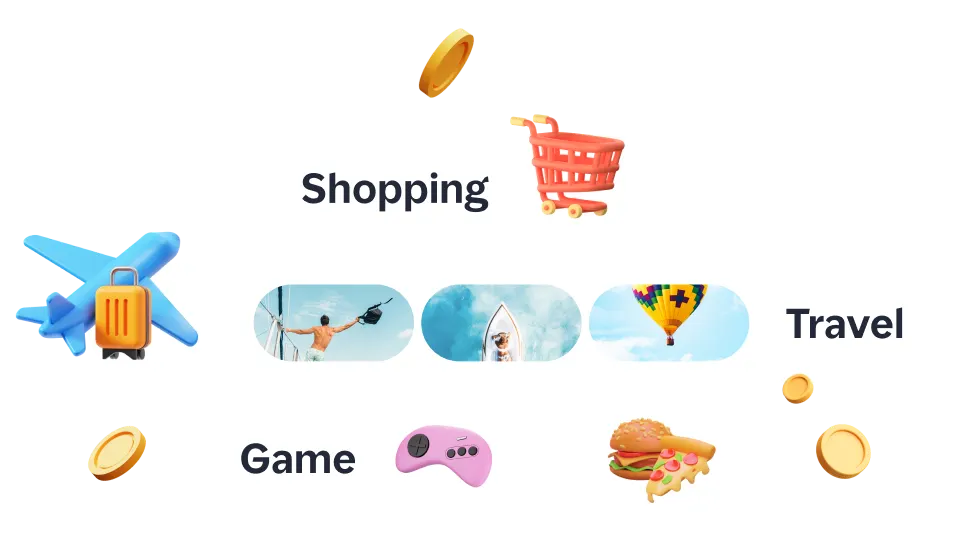
Shop, book trips, and play games to earn Cashback
No points, no credits. Just real cash. Withdraw to your Paypal account and spend however you like.