Blog
Contents
What ShopBack is, in case you are new
Why the number "2,000+" matters more than any one merchant's rate
The category shifts, one by one
The Chrome extension is the thing that makes this practical
How the affiliate model funds it
The categories I did not expect ShopBack to help with
What did not change
The three-layer stack, restated
What to do next
Blog
How ShopBack's 2,000+ US Merchants Changed My Everyday Purchase Stack

ShopBack has 2,000+ US merchant partners across retail, tech, groceries, streaming, and travel. How that breadth shifted my everyday purchases by category.
How ShopBack's 2,000+ US Merchants Changed My Everyday Purchase Stack
Verdict: ShopBack has 2,000+ US merchant partners (per the June 2025 press release), spanning retail, tech, groceries, streaming, travel, fashion, and beauty. That breadth of footprint is what shifted my everyday purchase behavior. Not because any one merchant offered a huge rate on a huge day, but because roughly 8 out of every 10 online purchases I actually made were on merchants ShopBack partners with. The Chrome extension is what tied it together.
Start here: Sign up free at shopback.com and install the Chrome extension. Your existing shopping rotation, unchanged, will start earning USD cashback the next time you check out.
What ShopBack is, in case you are new
ShopBack is an everyday rewards platform. You start a shopping session at ShopBack (web, mobile app, or Chrome extension), click through to a partner retailer, and check out as normal. The retailer pays ShopBack an affiliate commission, and ShopBack shares most of that commission back with you as USD cashback, paid via PayPal or ACH once the order confirms. You pay the retailer's normal checkout price. No markup, no service fee, no withdrawal fee on standard payouts.
The scale that lets the model work: 20M+ active annual members, US$5.5B in annual GMV, US$900M+ paid to members globally since 2014, 20K+ merchant partners across 13 markets, 2,000+ US merchant partners specifically. Fast Company named ShopBack to its 2026 World's Most Innovative Companies list, Finance and Personal Finance category, on 24 March 2026.
Why the number "2,000+" matters more than any one merchant's rate
The mistake I made in my first few months on ShopBack was thinking about it merchant by merchant. Does Merchant X have a good rate today. Does Merchant Y beat Merchant Z. That framing is wrong.
The right framing is coverage. If you make 60 online purchases a year across roughly 30 different retailers, the useful question is: how many of those 30 retailers is ShopBack partnered with. If the answer is 24 out of 30, cashback becomes a background layer on most of your spend. If the answer is 4 out of 30, it stays a niche tool for edge cases.
In my case, the answer was closer to 24. That is what 2,000+ US merchants buys you: the odds tip in favor of "yes, this merchant is on ShopBack" for most everyday retail decisions.
The category shifts, one by one
The story is not that I started shopping differently. It is that the platform quietly earned cashback across categories I was already spending in. Six changes to my stack happened over the course of a year.
Retail marketplaces
My biggest daily-purchase category. Everything from a laptop stand to a birthday gift to a rug for the living room. ShopBack's US partner roster includes major online marketplaces, department stores, and specialty retailers. Rather than list per-merchant rates (which change and are always current at shopback.com), the material shift is that most of my retail purchases stopped happening without a ShopBack click-through. Not because I remembered to check every time. Because the Chrome extension caught me on the retailer's page and asked.
Tech and electronics
High-ticket, low-frequency. A laptop, a monitor, a pair of headphones, one appliance. Cashback on a US$1,200 laptop is worth thinking about, and this is where routing through ShopBack shows up as real dollars. Partners include major electronics brands and multi-brand retailers. The Chrome extension flagged one order I would have made without it and stacked cleanly with the 3x category multiplier on my card.
Groceries and household delivery
Weekly cadence. Grocery delivery, household consumables, cleaning supplies, occasional bulk orders. This is where the "everyday earning frequency" USP shows up. Small per-transaction cashback, but the transactions repeat every week. Over 12 months, my grocery and household line item was one of the top four cashback contributors.
Streaming and subscriptions
Once or twice a year per subscription (annual renewals) or on a fresh signup. ShopBack partners with select streaming and subscription services in the US. The trick I learned: sign up for or renew subscriptions as annual (rather than monthly) plans routed through ShopBack, because the cashback attaches to the one-time transaction. Annual renewal for a productivity tool earned decent cashback because I bought a full year in one purchase.
Travel (via Travel Planner)
Highest per-transaction cashback of any category. Travel Planner launched 14 July 2026 at shopback.com/travel and compares prices across integrated OTAs (Trip.com for flights and stays, Pelago for activities, Dida for lodging inventory). A single hotel booking of USD 500 to USD 1,500 earns cashback that adds up faster than a month of retail. This became my routine for any trip with more than one night of accommodation.
Fashion and beauty
Seasonal cadence. Twice-a-year fashion refresh, occasional beauty replenishment, gifts. ShopBack partners with major US fashion and beauty retailers. The category earns steadily rather than dramatically, and the Chrome extension is what keeps it from being forgotten during sale weekends.
The Chrome extension is the thing that makes this practical
I keep coming back to this because it is the single most important product decision that made 2,000+ merchants useful to me instead of just impressive on paper.
The ShopBack Chrome extension does one job: when you land on a partner retailer's site, it detects that the retailer is on ShopBack and pops up a badge showing the current cashback rate plus a one-click activation button. That is it. But it flips the mental model from "remember to start at ShopBack" to "ShopBack reminds me at the retailer".
For a platform with 2,000+ US merchants, the difference is enormous. Without the extension, I would have needed to remember ShopBack existed on every one of hundreds of shopping decisions across the year. With the extension, ShopBack reminded me automatically on the retailers where cashback was available. The failure mode of forgetting to activate is what kills most cashback tools for casual users, and the Chrome extension is engineered directly at that failure mode.
How the affiliate model funds it
Worth restating plainly, because it is the trust question first-time users ask.
Retailers spend on marketing regardless of whether ShopBack exists. Affiliate marketing is a big line item in that budget: retailers pay third-party publishers (comparison sites, review sites, cashback platforms) a commission on referred sales. When you click through ShopBack to Amazon or Walmart or Expedia, a tracking cookie tags your session. If you buy, the retailer pays ShopBack a commission. ShopBack takes a small share to run the platform and passes most of it to you as USD cashback.
Three consequences:
- Your checkout price is unchanged. The retailer's price is the same whether you route through ShopBack or not. The commission is coming from the retailer's marketing budget, not from your wallet.
- ShopBack can afford to be free for members. No subscription, no service fee, no withdrawal fee on standard PayPal or ACH payouts.
- The 2,000+ figure grows over time. As ShopBack signs new affiliate partnerships, the merchant list expands. Partners fund cashback; ShopBack does not fund it from its own balance sheet.
Over 12 years, this model has produced US$900M+ in cashback paid to members globally and US$5.5B in annual GMV driven to merchant partners. It is not a promotional gimmick. It is a functioning affiliate marketing business at scale.
The categories I did not expect ShopBack to help with
Two categories caught me by surprise, and are worth calling out because they may be blind spots for other first-time members.
Grocery delivery. I assumed grocery was too everyday for a cashback layer. It turned out grocery and household delivery partners were among the most useful monthly earning categories because the cadence is weekly and each transaction is USD 60 to USD 150. Cashback per transaction is small, but 50 transactions a year of small cashback is a meaningful annual line item.
Streaming annual renewals. I renewed a productivity subscription and a media subscription annually rather than monthly, both routed through ShopBack, and both earned cashback on the one-time transaction. This is a change to purchase timing (annual vs monthly), which is a small behavioral shift for a noticeable annual cashback bump.
What did not change
To keep the framing honest: some categories did not change materially.
Highly discounted flash sales at retailers with tight margins. Some sale events explicitly exclude affiliate commissions in their terms. Cashback did not track on a couple of these. The lesson was to read the merchant page on ShopBack before big-basket sale weekends to check whether cashback is active for that event.
Purchases from retailers not on ShopBack. A few niche retailers I use are not partners. Those purchases earned no cashback, obviously, and I did not switch away from them, because I liked the product. This is the honest ceiling of the platform: it earns on partner retailers only, not on the whole internet.
In-store purchases. ShopBack US is primarily an online-earning platform. My in-person grocery runs, coffees, and gas stops earned nothing from ShopBack (they earned from my credit card, separately). This is a design choice; ShopBack's offline earning surfaces are stronger in select other markets.
The three-layer stack, restated
The final purchase stack that emerged, on any given online transaction, has three layers:
- ShopBack cashback at the affiliate layer, funded by the retailer's affiliate commission budget, paid in USD to PayPal or ACH.
- Promo code discounts at the merchant layer, if a code applies and stacks (many do; a few sale codes exclude affiliate sales, and the merchant page will call this out).
- Credit card rewards at the issuer layer, funded by the interchange economics of the card network, paid as card points or statement credit.
Three independent parties fund three independent rewards on the same purchase. That is why cashback stacks with card rewards without competing. The mental model is not "which one is best" but "which layers apply and how do I make sure all three fire".
What to do next
Three concrete steps, in order:
- Sign up free at shopback.com. No credit card. About 60 seconds. Set PayPal or ACH as your withdrawal method.
- Install the ShopBack Chrome extension. This is the piece that turns 2,000+ merchants into a passive background layer instead of a manual routing chore. Download the ShopBack mobile app for app-only rates and Travel Planner.
- Do nothing else different. Shop where you were going to shop. Buy what you were going to buy. Let the extension handle the reminders. Come back at the end of a year and see the total.
The point of 2,000+ merchants is not that you need to use all 2,000. It is that when you happen to shop at any of them, the layer is already there.
Disclosure: ShopBack earns affiliate commissions when members shop at partner retailers. The 2,000+ US merchant figure is from the June 2025 US press release. Cashback rates vary by merchant, category, and time and are always current at shopback.com. Cashback shows Pending within 48 hours and clears to Confirmed after the retailer's return window. Individual earnings vary based on shopping volume and category mix.
Add ShopBack Extension
Install the browser extension for auto coupons and cashback reminders.
Download ShopBack App
Get the app to earn cashback and manage rewards on mobile.
 Scan QR or download below

Related articles
Fast Company Named ShopBack One of 2026's Most Innovative Companies
Fast Company named ShopBack to its 2026 World's Most Innovative Companies list less than a year after US launch. Here is what ShopBack actually does.
I Earned USD 620 Cashback in My First Year on ShopBack US
One year on ShopBack US: USD 620 total cashback across retail, travel, streaming, and groceries, with a month-by-month log of what worked and early mistakes.
I Tried ShopBack Travel Planner on a NYC to Tokyo Trip: The Numbers
A first-person NYC to Tokyo booking with ShopBack Travel Planner: effective-price comparison across Trip.com, Pelago and Dida, plus how card rewards stack.
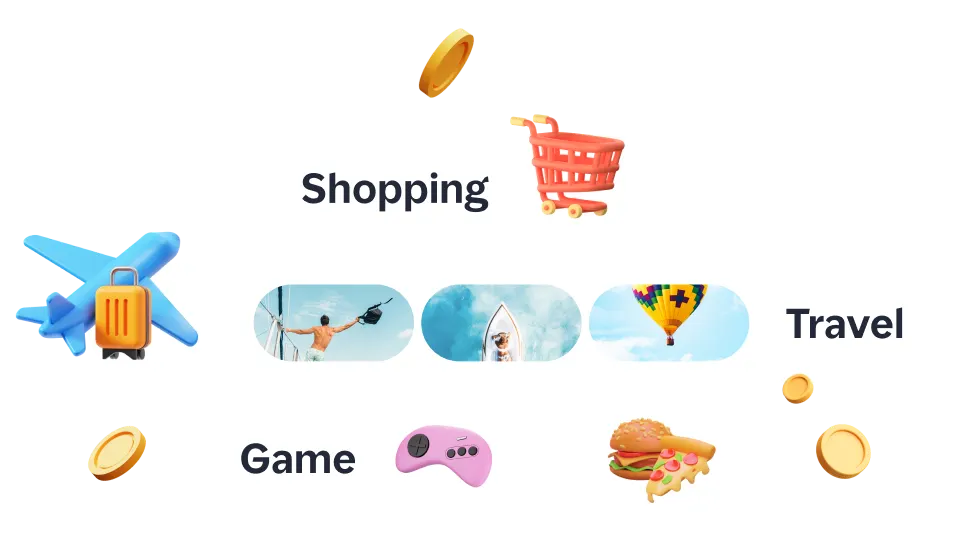
Shop, book trips, and play games to earn Cashback
No points, no credits. Just real cash. Withdraw to your Paypal account and spend however you like.